Showing posts with label adventure. Show all posts

Sunday, February 14, 2021

Through Gates of Splendour

by Elizabeth Elliot
274 pages / 1981

This is the original true account of a missionary endeavour that went terribly wrong, and yet was used by God for great good. The story is continued in such books as The End of the Spear, by Steve Saint - one of the sons of the missionaries who risked their lives to bring the gospel to the hostile Auca tribe of Ecuador.

What makes this biography so striking is that the author, Elizabeth Elliot, one of the missionaries' wives, does not know at the time of writing how the story will "end." Indeed, we still do not know, and that is one of the insights shared by Elliot, and relied upon by the mssionaries themselves - that we are neither the authors, nor the final readers, of our own lives' stories.

Elizabeth Elliot's later writing also makes clear how we must trust that the Lord's purposes in both our successes and our failures are greater than we can imagine. 

If you would like to read Elliot's account of the beginning of a God-guided advanture, you can get it here and here in Canada.

Monday, January 25, 2021

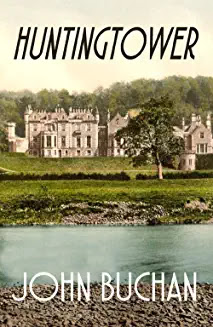
Huntingtower

by John Buchan
2021 (originally published 1922) / 125 pages

It was Alfred Hitchcock who brought John Buchan to my notice, and perhaps also to the notice of many others. If you are a fan of Hitchcock's work in the 1930s, you have probably seen The 39 Steps - which was based on Buchan's novel of the same title. I think that he should be more known for the very unusual set of linked stories, The Path of the King, which traced the (fictional) aristocratic lineage of President Lincoln.

But onto this also unusual novel - the story of a middle-aged Scottish man in his early retirement, Dickson McCunn. Dickson, the owner of a chain of grocery stores, finds himself at loose ends when he no longer has a company to run. His wife is taking a rest cure at a spa in the country, but Dickson hates the spa, so he begins his retirement by taking a "walking tour."

In typical Buchan (and Hitchcock) style, Dickson gets involved (initially unwillingly) in a quest to save a Russian princess from criminals who want to take her royal riches  for themselves - and herself for their their overbearing leader.

A few cautions:

  • There is a strange offhand reference to "the Jews" who are behind all these shenanigans, but Buchan does not seem to be describing some shadowy international conspiracy, but just the typical corruption and crime that follows any overthrow of the established order (since the novel is set just after the Bolshevik Revolution). Nonetheless, it is disturbing.
  • Dickson seems to have a rather distant relationship with his wife, but it seems to be partly based on his early retirement doldrums. He does warm up to her, and vice versa, after his adventure.
  • Finally, the novel is full of Scottish dialect and archaic speech, but it does become clearer, and gives an amusing and warm flavour to the interaction between Dickson and his new allies.
If Huntingtower has all these problems, why read this book? C.S. Lewis reminds us that reading old books is valuable, because we can generally see through their errors (because we don't share those errors), but we can learn about values that we've forgotten or dismissed. Keeping that in mind, here's what I liked about the story.
  • Dickson, a newly retired business owner, learns how to step outside his carefully ordered life to play a whole new role as a protector of a princess. It's not easy, either: When he goes back to Glasgow to protect the princess's jewels in a safety deposit box, he is tempted to leave it at that, but then realizes that he is being called upon to help a vulnerable young woman. He rises to the challenge, like a true good Samaritan, even when he gets beaten up a couple times.
  • Finally, Dickson makes friends with the Gorbal Die-Hards, a gang of young ruffians from his hometown who run up against the much rougher and more malicious and ambitious gang out to capture the princess and her gems. Dickson gains a real respect and affection for the Die-Hards and eventually takes them under his wing - a much more long-term commitment than his help for the princess.
In other words, this is a coming-of-age story for a man who is already of age - a good reminder that we're never too old to take on new challenges for the help of our neighbours. If you want to find Scottish post-WWI adventure, as Dickson McCunn unexpectedly did, you can find Huntingtower here, and here in Canada.

Monday, May 29, 2017

Akimbo and the Lions

by Alexander McCall Smith
1992 / 66 pages

Alexander McCall Smith is best known as the author of the The No. 1 Ladies' Detective Agency but it turns out he's written a number of children's books as well. And they are good. Really good!

Akimbo is a boy who has access to all the coolest animals in Africa – his dad is chief ranger in charge of a wild game reserve, which means that from one book to the next Akimbo is having adventures with snakes and baboons and elephants and crocodiles, oh my!

In Akimbo and the Lions he accompanies his father to trap a lion harassing a small village. But things don't go as planned – instead they trap a cub and scare the momma away. That means someone needs to take care of this wee little lion, and Akimbo convinces his dad that he is just the boy for the job!

McCall does a wonderful job of balancing the tension in the book. There were moments where my 5 and 7-year-old were covering their mouths (and sometimes their eyes) but these moments didn't last too long.

This is just a good old fashioned adventure, perfect for their age group. It is short – a book that can be read in an hour – exciting, sometimes sweet, with gentle humor along the way too. And in this first story, there is absolutely nothing to object to – Akimbo doesn't talk back to his parents, or teacher. No sex, no language, no weird philosophies.

The only downside would be God's absence. In an adventure where God's creation has such a big role, it would be only natural to give God his credit for these wonderful creatures. But it seems that Akimbo and his parents are not Christians. And if I was going to add one other nitpick I'll also say this is not the sort of children's book that works equally well as an adult book (this is no Narnia, for example). The story is too simple and predictable for older folk. I only mention that because, since this is by a well known, and well-loved adult-fiction author, that might raise some expectations. But while these are very good kid's books, they are kid's books.

There are five in all, in this order:
  1. Akimbo and the Lions
  2. Akimbo and the Crocodile Man
  3. Akimbo and the Elephants
  4. Akimbo and the Snakes
  5. Akimbo and the Baboons
The others

In addition to Akimbo and the Lions we've now read the other four in the series.

Akimbo and the Crocodile Man was a bit scarier as there is an actual crocodile attack. It all turns out fine in the end, but that extra bit of tension means I was glad we did read things in order, starting with Lions before Crocodile Man – that order meant even in Crocodile Man's scariest bit, my girls understood that this sort of book was going to have a happy ending.

Akimbo and the Elephants had Akimbo going behind his dad's back to stop ivory (which comes from elephant tusks) poachers. He has good intentions, but lies a number of times, and even steals some ivory to serve as bait for the poachers. We had to explain to the girls that Akimbo was doing something downright dumb here - that he should be talking his plan over with his dad. So while we enjoyed reading it together, I would have some reservations about my children reading this by themselves.

In Akimbo and the Snakes we come along as Akimbo visits his Uncle Pete's snake farm for a month and learns what it means to "milk" snakes. My nine-year-old enjoyed learning more about snakes but said this was definitely a day time and not bedtime book. The only objectionable bit would be in the notes after the story where it briefly mentions that snakes are thought to have evolved from lizards.

In Akimbo and the Baboons a "baboon lady" comes for a visit. This is a visiting scientist who has come to study that baboons, and Akimbo and his cousin Kosi get jobs as her assistants. The author believes in evolution, and while that only comes out clearly in a section in the back – "Brilliant baboon facts" where McCall notes baboons are not in the same genetic family as human beings – the scientist, Jen, notes a few times in the story, how the baboons are "a lot like us" or "just like us." True, in some ways, but when we read between the lines here, we can see this is about being similar in an evolutionary sense. I'm making much of this and will note my nine and under kids didn't even notice the evolutinoary angle.

So if I was getting these for a school library, I would get the first two – two very enthusiastic thumbs up! – but maybe give the third a miss, and the fourth and fifth with a note about evolution in the front.

What's the ideal age range? I'd think kids in Grades One to Three are sure to enjoy them.

Akimbo and the Lions is available at Amazon.com and Amazon.ca.

Tuesday, February 28, 2017

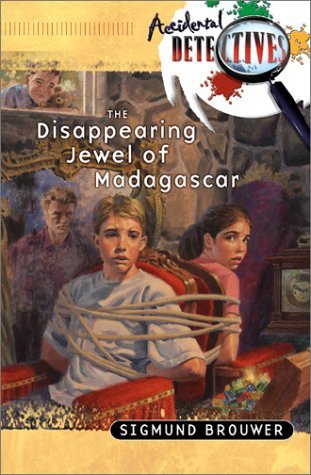
The Disappearing Jewel of Madagascar

by Sigmund Brouwer
140 pages / 2002

This is a great book.

It has a great beginning with the “star” of the book, 12-year-old Ricky Kidd, getting the sort of haircut you would expect from a barber that can’t stop sneezing. And it has a great ending when Ricky’s friends are involved in a memorable worm-eating escapade.

In between the reader is introduced to the cast of characters: Lisa, a girl who can play sports with the best of the boys, even if the boys don’t want to admit that; Mike, the impish rascal who pulls gentle pranks on everyone; Ralphy, the computer genius who owns his very own iMac; and Joel, Ricky’s six-year-old brother, who seems to be able to disappear and appear at will.

As the title suggests a jewel plays a central role in this book. The Jewel of Madagascar is an impressive rock with a very strange curse placed on it: whoever touches it will have his friends turn into strangers, and have strangers turn into friends. As a Christian kid Ricky doesn’t think much of curses…until all his friends start avoiding him. Could the curse be real?

Well, no. But I’m not going to ruin the story by telling you anything more.

I liked the story in this book, and also liked the underlying Christian flavor. The author communicates a Christian message without beating his readers over the head with it. In fact there is only one page of explicitly Christian content in this book. When Ricky’s friends start avoiding him he gets a little depressed and worried. His dad notices and spends a few paragraphs talking to Ricky about how we don’t need to worry because we can always trust in God.

The only objection I can raise has nothing to do with this particular book. In another book, The Volcano of Doom, which is a part of the same “Accidental Detectives” series, a few paragraphs are included on how the Bible is not a “science manual” and how the Genesis creation account tells us why the universe was created, not how it was done. It is a not-all-that-subtle shot at Six-Day Creationism, though kids will likely miss it. Still, parents may want to avoid that book.

I do, however, highly recommend The Disappearing Jewels of Madagascar for anyone who has kids in the Grade 3 to Grade 7 range.

You can pick it up at Amazon.com by clicking here and Amazon.ca here.