Monday, April 25, 2022

Maker Comics: Draw a comic

by JP Coovert
2019 / 124 pages

Cartooning was a fascination as a kid, so I've read a few different books on how to do it, and I think this might be the best overall introduction I've seen. One of its strengths is the way it teaches - via a comic adventure! Our guide Maggie, and her dog Rex, are trying to fulfill her grandfather's dream of having a comic library, but the villain of the piece, Dr. Stephens wants to turn the building into a parking lot. How can they stop him? A discovered treasure map might lead to just what they need to buy the building.

Alongside their treasure quest, readers are given 6 projects to complete: 

  • Learning the parts of a comic
  • Planning a comic strip
  • Drawing your comic strip
  • Making a one-sheet, 8-page comic
  • Printing your one-sheet comic
  • Make a bigger comic book

There's piles of information here, but kids only have to use the bare bones of it – just a pencil and a sheet of paper – to start making their own mini-comic books. And if they get into it, then they can dive back into the book to learn more about the different pencils, pens, brushes, and techniques they can use to get better. 

There isn't a lot of help offered for actual drawing technique – kids will have to turn elsewhere to find more on that. What this book is about is equipping kids to get a running start in presenting their story or joke in a polished and yet still easy-to-do manner, even while their art skills might be at the stick figure level. They can get excited about starting and completing an actual comic. 

The only caution is a minor one, a passing mention made in one of the comic captions about dinosaurs living 65 millions years ago. 

My 10-year-old daughter and I have read another in this "Maker Comics" series and found Build a Robot a lot harder to get off and running with – you need to have a spare small motor lying around. That said, Draw a Comic does have us interested in checking out others, like their Grow a Garden and Bake Like a Pro titles.

Tuesday, March 22, 2022

The Misadventured Summer of Tumbleweed Thompson

by Glenn McCarty
327 pages/ 2019

I’m sure I’m not the first reviewer to describe Misadventured as Mark Twain-esque. This is a tale of two very different boys, living out frontier life in 1876, and equally matched as both friends and rivals. Tumbleweed Thompson is a shyster and the son of a shyster, blowing into Rattlesnake Junction as father and son peddle miracle medicine from the back of their wagon. 

Eugene Appleton, a good son of the town’s pastor, is in the audience, watching as the peddlers are shown up and run out. But when Tumbleweed reappears on his ownsome, he pulls Eugene into a whole summer’s worth of getting chased by smugglers, trailing train robbers, and trying to outdo each other for the attentions of the mayor’s daughter, Charlotte Scoggins, a misadventurous lass herself. 

It’s evident the author is Christian, though that might not be apparent to the 10–14-year-old audience this is intended for because, even as Eugene means well, he doesn’t always act well (and Tumbleweed often enough doesn’t even mean well). That would be the big caution then, not to give this to boys who are struggling with telling right from wrong themselves. That does mostly get sorted out at story's end, when both boys do the very best thing, acting in defense of a widow and a man falsely accused. 

Loads of fun!

Friday, March 18, 2022

Once again, 5 good, but not "really good," comics

The name of this blog is "Really Good Reads" so why review graphic novels that are good but not great

It's because, while these comics themselves might not be outstanding, they are an outstanding way to get reluctant readers into the habit of regularly reading. Some of these will use pictures to draw them in, and then the story will keep them hooked. And then, as they grow, they can progress to more complex graphic novels which often have as much text as full-size books. And then it is only a hop, skip, and a jump to reading those non-graphic sorts of novels. Many of the more complex graphic novels have as much text as many a full-size book.

In other cases, graphic novels can serve as a great introductory level textbook to a topic. Think of it as a Dummies sort of broad overview, wonderfully accessible and still highly informative.

Unfortunately, many comic books are silly, racy, gory, or disgusting in other ways, so if you have a son or daughter who you've managed to turn on to reading, then they might start chewing through graphic novels, and be looking for more. So, to keep those fires burning, here are some solid suggestions.

Incubators: A Graphic History
by Paige V. Polinsky and Josep Rural
2022 / 30 pages

This a short, absolutely fascinating history of how incubators were invented, and then popularized. Did you know they were first modelled on incubators used to hatch chicks? The ones for babies were incredibly expensive, and no one could afford them, so to finance their opporation one of the inventions popularirzers started charging people to see the premature babies, with the money collected then going to their care. What a weird approach, but it saved countless lives!


Machines that think!
by Don Brown
2020 / 120 pages

Where did computers and robots come from? Author Don Brown has given a comprehensive overview, starting with the discovery of binary, to the invention of mechanical computers, then transistors, and bringing us all the way to today's self-driving cars. 

Our narrator is Muhammad ibn Mūsa all-Khwârizmi, the popularizer of Arabic numbers (ie. 1,2,3, instead of the Roman numerals I, II, III), which might be a politically-correct effort to counterbalance all the other, Western-based, advancements in math and engineering the rest of the book details. If so, then thankfully, that's as far as PC culture intrudes. This is largely "just the facts ma'am." Old and new are introduced, from Blaise Pascal and Ada Lovelace to Steve Jobs and Bill Gates. Some of these folks had checkered pasts, so I appreciated that the author sticks with their computer contributions and doesn't get into anything else. 

Artwork is very cartoonish, with the exception of some schematics which are drawn more realistically. There are a lot of complex ideas and technological leaps details here, and this friendly artistic style helps make this a far less intimidating work than it might otherwise have been.

This is just the sort of broad overview that could get a certain sort of kid interested in engineering. I'd recommend it for ages 12 and up.

I survived the Nazi invasion, 1944: a graphic novel
by Lauren Tarshis
2021 / 160 pages

After the Nazis invaded and conquer Poland, they quickly start rounding up Jews, and placing them together, in ghettos. These are rundown neighborhoods, which the Germans then surround with barbwire to keep the Jews in. This is the story of Max and Zena, two Jewish children who get in a tussle with a German soldier and have to flee the ghetto to get away. They end up finding a sympathetic farmer, and a group of Resistance fighters who help them hide in the vast forests of Poland. 

This is an exciting story, with the Nazis almost finding them a number of times, and Max even gets shot. By story's end, Max is telling us that he has trouble sleeping, and we've seen enough of what he experienced to understand why. 

This is intended for teens, and largely age-appropriate, noting the many who died, without actually having any of the Jews we're introduced to get killed. That's not realistic - we're told in the appendix that more than 90% of the Polish Jews didn't make it to the end of the war - but that is understandable for this age group. There is a happy ending for all, a marriage in one case, a move to Israel for some, and a move to America for Max, Zena, and the father they've been reuinted with.

The big caution for this book concerns the violence. In addition to Max getting shot, we also see three German soldiers get shot, and a fourth hit in the face by a large rock, all of them presumably killed. While it is not especially gory, there is some blood shown. For 12 and up, this is likely no big deal, but because this is a comic book, kids a lot younger might be tempted to open it up to take a look. And they should be steered clear.

Fred & Marjorie: A doctor, a dog, and the discovery of Insulin
by Deborah Kerbel
illustrated by Angela Poon
2021 / 56 pages

This is the story of how, in 1920, Dr. Fred Banting's experiments on dogs led him to the discovery of Insulin. Both man and animals produce insulin, and it is used to regulate the amount of sugar in our bloodstream. Without it, a person can develop heart and kidney disease, vision loss, and more. The only treatment before Banting's discovery was to limit a person's food intake, to thus reduce their blood sugar. But this was starving someone to keep them from getting heart disease, so it wasn't much of a treatment.

The comic is simple and solid, a bit jumpy in parts likely because Dr. Banting's recall of events was also spotting in parts. It's a bit of a detective story, with Banting and his colleague first needing to figure out what it was that these patients weren't getting enough of. A middle-of-the-night moment of inspiration led him to propose a series of dog experiments, half of them having their pancreas removed to induce diabetes, and others studied to see what it was their pancreas was secreting. These secretions would then be injected in the diabetes dogs to see if they helped. This process is what eventually led to the discovery of insulin. But it did involve a lot of dogs dying. This wore on Banting, and the comic shows some of the emotional toil it caused him. But he knew that if they figured this out, he could save millions of children. So he kept on. 

The cautions concern age appropriateness. Early in the book there is mention made of children dying of diabetes, and some are shown in a near skeletal state (though in line drawings that aren't overly detailed). Sensitive children may also find it hard to read about, and seeing some of the dogs dying, though again, there is nothing overly graphic shown. A more notable caution is about the discussion in the appendix, about whether animals experimentation is bad or good. The book, in showing it, and touting the benefits of it, is clearly making the case for, but the discussion the back takes a neutral stance, noting some believe all life to be "equally sacred" and that sacrificing a dog to help humans is immoral. I suspect some Christian children in the young grades that this is intended for (Grades 4-7) might need a little help in seeing through the lie in that position.

Who was the First Man on the Moon? Neil Armstrong
by Nathan Page
2022 / 64 pages

Despite the title, this is more about the Apollo 11 moon landing, and the whole crew, than it is about just Neil Armstrong. And that’s what makes this an interesting, if all-too-brief, read. Like all the books in the "Who is" series, the pages are small, which makes for only an average of 4 panels a page - this could be read in ten minutes. Of course, that's also a feature for some young readers.

The story also ends with their landing on the moon, which is a bit of an abrupt ending but does also leave readers wanting more. So they can turn to another moon landing graphic novel, The Far Side of the Moon, for more.

One caution would be an incidental mention of the moon being 4 billion years old. Another: that this recommendation shouldn't be taken as an endorsement of the "Who is" books, since this secular series frequently celebrates people who shouldn't be celebrated, like evolutionist Neil DeGrasse Tyson, crossdresser RuPaul, homosexual activist Harvey Milk, abortion defender Ruth Badar Ginsburg, and communist revolutionary Che Guevara. 

Thursday, March 10, 2022

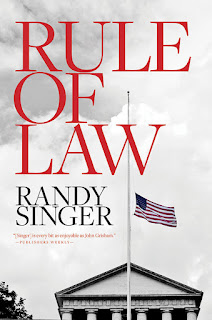
Rule of Law

by Randy Singer
2017 / 473 pages

Rule of Law is a legal thriller, but the story begins outside the courtroom, with a SEAL team storming an Arabic jail to free an imprisoned American journalist. When that mission takes a tragic turn, the fallout ends up in front of the Supreme Court. 

Author Randy Singer uses his fictional story to examine the real-world way in which the US government, and particularly the executive branch, has been acting as judge, jury, and executioner in placing foreign nationals on a “kill list,” and then taking them out, and those near them, via drone strikes. Singer doesn’t seem to be arguing against all drone strikes. But the title he has chosen certainly references the idea that we all need and benefit from accountability, so we all – including even the president – need to be under the law. Our leaders must not act like they are above it, as dictators do. 

This is well written, with a great balance of action, some romance, unexpected courtroom twists, and some realistic, subtly woven in, wrestlings with God. Singer is rapidly becoming a favorite author.

Saturday, March 5, 2022

A Different Shade of Green

A Biblical Approach to Environmentalism and the Dominion Mandate
by Gordon Wilson
2019, 189 pages 

Christians are right to be skeptical of an environmental movement that sees Man as a problem for the planet, rather than the steward of it. But, as Gordon Wilson explains in his A Different Shade of Green, Christians can’t simply be contrarians – we won’t arrive at the biblical position simply by being reactionary and anti-Green. Instead, our foundation has to be God’s Word, starting with the dominion mandate in Genesis 1:28, and then God’s own evaluation of His creation as is expressed a few verses later: “and it was very good” (Gen. 1:31). We are to value His Creation and the creatures in it because He values it, and we are to take charge of its care because He has made us responsible for it.

What Dr. Wilson has gifted us with here is a challenging and engaging Biblical Environmentalism 101 – he hasn’t worked it all out for us, but he is pointing us in the right direction. For more of Wilson’s creation care thoughts, be sure to check out his nature documentary series, The Riot and The Dance.

Monday, February 14, 2022

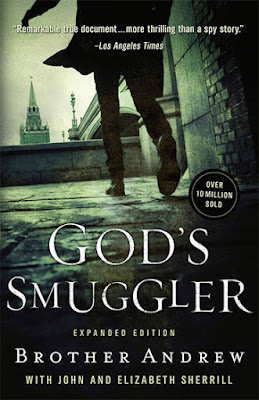
God's Smuggler

by Brother Andrew 
2015 (originally 1967) / 288 pages

This is an amazing true story about God’s miraculous interventions to get Bibles to his persecuted Church in both Communist countries and Muslims ones.

There are miracles all around us, but the rising sun, our pumping hearts, and babies’ wriggling toes do their thing with such regularity as to seem ordinary. Not so the miracles in God’s Smuggler. Here “Brother Andrew” (1928- ) relates one extraordinary answer to prayer after another: a needed cake delivered by an off-duty postman, money of the right sum arriving at just the right time, the instant healing of Andrew’s crippled ankle. 

Then, in his work smuggling Bibles behind the Iron Curtain, this Dutchman came to rely on the extraordinary becoming regular. Border crossings into Communist countries were always tense, but each time Brother Andrew would ask God to “make seeing eyes blind” and again and again God would do so. The same border guards who had just taken apart the car in front of them would simply wave them through or, if they did inspect their cargo, the guards would completely miss the Bibles crammed in everywhere. It was through these regular miracles that God used Andrew and his coworkers to deliver His Word to millions in the persecuted Church. 

Cautions

While reading this to my children, I told them that we shouldn’t understand the many miracles Andrew experienced as evidence that he was always acting and praying as he should. He acknowledges himself that God honored some of his requests despite how he prayed. So we don't need to take this all prescriptively, as what we also should do, but we can take it descriptively as evidence of God’s great love for his persecuted Church.

Conclusion

We can also appreciate how aware Andrew was of his complete reliance on God. We all are, all the time, but when times are good we so often forget. Living his life in danger so much of the time, Brother Andrew wasn’t nearly so forgetful. 

This would be also be a valuable tool to impress on a younger generation that while in their lifetimes it has primarily been the culture that has been the biggest enemy of God’s Church, in many places, and at many times, it has been the government. 

I would recommend this primarily for adults, because it does take some discernment to think through where Brother Andrew is relying on God in a ways that we too should imitate, and where he might be getting close, or even crossing the line, into testing God. 

For a younger audience, just read it to them and discuss afterwards. Then it could be good for as young as 8.

Monday, February 7, 2022

The Divine Challenge: on matter, mind, math, and meaning.

by John Byl
2021 / 421 pages

Is the Christian vs. evolutionist/naturalist/materialist debate about the best explanation for why there is something, rather than nothing? No, says Dr John Byl, in this brilliant apologetic work. The real question is “Who will rule: God or Man?” 

In the world’s attempts to usurp God, they’ve crafted many a worldview to try to explain things apart from Him. Dr. Byl shares the world’s best godless explanations and shows, often in the proponents’ own words, how their attempts are self-contradictory or simply fail to explain what they set out to explain. Naturalism says there is nothing outside of nature, and materialism that there is nothing outside matter, so how can either explain how matter came to be, or the non-material world of math and meaning? Byl also makes evident how very often these godless philosophers understand the emptiness of their best answers, and yet cling to them anyway only because they hate the alternative: bowing their knee to God. 

This is a book that will stretch most readers, and in some parts (Chapter 14 was a doozy for me) I only got the gist of it…but what an encouraging gist it was! While the 2004 paperback edition is still available, Dr. Byl has made the 2021 revision a free ebook you can download on his blog here

Thursday, January 27, 2022

We Hereby Refuse: Japanese American resistance to wartime incarceration

by Frank Abe and Tamiko Nimura

2021 / 160 pages

After the Japanese bombing of Pearl Harbor, tens of thousands of Americans of Japanese descent were rounded up and placed in detention camps around the US. They lost their jobs, their businesses, and even their homes, not because of any crimes committed, but simply for their ethnic roots. This same indignity wasn't forced on German or Italian Americans, even though Germany and Italy were at war with the US. Just Japanese Americans. And despite the obvious discrimination against them, the vast majority went without protest, believing that quiet acceptance was a way of showing their loyalty and patriotism.

What the graphic novel We Hereby Refuse recounts are the stories of Japanese Americans who did protest, in very different ways.

One protester was an otherwise quiet young lady. Mitsuye Endo was a 21-year-old typist who lost her job when she was ordered to report to the internment camp. A lawyer asked her to sue the government for causing her job loss. He recruited her because she seemed the ideal candidate at a time when everyone was scared of Japan: she did not speak Japanese and didn't follow a Japanese religion like Buddhism or Shinto. She even had a brother serving in the US army. And she had also done everything the government had ordered her to. She was quiet and still she stood up, her case eventually going all the way to the Supreme Court, where she won.

Another story shared is that of Jim Akutso, who repeatedly tried to sign up for the Army but was refused because of flat feet. After he was imprisoned in a detention camp he was found out he'd been drafted, but now he refused. His reasoning was that if his country wasn't willing to let him live freely, then he wasn't going to fight to protest the freedoms he didn't even have. His refusal was condemned by many other Japanese Americans, who thought his actions cast them all in a bad light. He was convicted of draft-dodging, and moved from the camp to a regular prison, and given a sentence that extend past the end of the war.

Cautions

I'm not familiar with the history here, so I can't really assess how fair the presentation is. I suspect that certain historical figures, particularly the Japanese Americans who acted as go-betweens for the prisoners and the US government, might dispute the way they are portrayed. However, the broad overview seems to be reliably done.

I don't generally recommend books that take God's name in vain, but I'm making an exception here because this is not simply entertainment but educational, sharing an event that needs to be more widely known. For Christian parents or librarians who might like to strike a line through it, the abuse occurs just once, on page 128. Another caution concerns age-appropriateness. Near the end of the book, an older woman kills herself in despair. She's shown beginning to wrap a lamp cord around her neck, and while it doesn't get more graphic than that, the act itself isn't something young children need to read about.

I'll also note that I've seen the authors making appearances on podcasts sharing their personal pronouns, so I rather suspect their politics and worldview do not line up with my own. But that difference wasn't evident in the book itself.

Conclusion

This was compelling, but I didn't find it an easy read. Some of that was due to my unfamiliarity with Japanese names, which had me confusing different characters so that I'd have to flip back and forth to keep things straight. But I was happy to keep flipping because it's a story worth knowing. We Hereby Refuse is a reminder that the government is powerful, and with power comes the need to use that power with great restraint. What happens when it doesn't act with restraint? We get victims by the thousands and tens of thousands, as happened here. Another lesson? The need for brave individuals to challenge government abuses, in the hopes of reducing the number of victims.

This would be a great purchase for Christian schools, and for parents to buy and read with their children. The serious subject matter means this is probably for 14 and up.

The 4-minute video below, offering some local news coverage, gives a good overview of the book.

Monday, January 24, 2022

When Faith is Forbidden: 40 days on the frontlines with persecuted Christians

by Todd Nettleton
2021 / 272 pages

Though it'd be best absorbed in the month-and-a-half that the title prescribes, I read this in just two days – it was simply too wonderful to put down. 

Each of the 40 chapters is a story of a Christian who shared God's good news with those around them, come what may. They shared it because they knew that the relatives trying to silence them, the mob trying to intimidate them, or even the policemen coming to arrest them, all needed what God had already given to them. So this is a story of Christians far braver than we, but more importantly, it is the story of the good God who sustained them. 

In a few instances He did so by way of big miracles: Muslims with no access to the Bible are reached in their dreams, a man shot twice in the chest survives because the bullets did no major damage, police tossing a house find a lost sewing needle but miss the three large boxes of Bibles in the middle of the room. In others, the miracles were maybe less spectacular, but exactly what was needed: a man who used to beat Christians is so won over he is now willing to suffer those beatings rather than stay quiet about his Lord, a woman whose husband was murdered is able to forgive the murderers, a drug addict who turns to God is instantly freed from his addiction. 

This is an incredible book, and much needed here in the West where we are terrified of speaking God's good news because of what it might cost us in status, or promotions, or friendships. These persecuted Christians want us to understand that for God's people, persecution is to be expected (John 15:18-21) but it need not be feared because our God is greater than the world and what we might have to suffer is nothing compared to what we have gained in Him.

This could be the sort of book you buy by the boxload, so you can give it to everyone you know.

Friday, January 14, 2022

It goes without saying: Peanuts at its silent best

by Charles Schultz
2005 / 160 pages

There seems something almost wrong about using a multitude of words to recommend a wordless book so let me hit just a few highlights and be done. The brilliance in this "tour through fifty years of Peanuts pantomime strips" manifests in at least three different ways.

  1. This is all ages. With no words to struggle over, my 6-year-old, still-learning-to-read daughter enjoyed this just as much as me. Might this be a gem for a reluctant reader?
  2. This is unique. We're all used to the regular puns that populate the newspaper comics page and know what to expect, but the sight gags here are humor of a whole different sort, and that curveball is sure fun.
  3. This is art. Schultz does a lot with a little - not just wordless, but his artistic style is also sparse, and it is amazing to see what he can communicate with just a few lines here and there.

I'll only add that if you enjoy It Goes Without Saying, you might want to check out Garfield Left Speechless. (or, for a twist, Garfield minus Garfield...although that one will be above kids' heads).

Friday, January 7, 2022

Kitten Construction Company: meet the house kittens

by John Patrick Green

70 pages / 2018

The author of Hippopotamister is back with another charming treat for early readers. The story begins with "the city of Mewburg preparing for a big project..." They are building a new mansion for the mayor, and to get it started the city planner has to find the right architect. He has a few candidates to chose from, and the first up has a brilliant design. But there is a problem: the architect is a cute kitten!

"Sorry," he tells little Marmalade, "I regret that you are just too adorable to be taken seriously."

When Marmalade goes off to drown his sorrows in a saucer of warm milk, he meets another kitten dealing with the very same problem: no one is giving him a chance, because he's just so cute. The two decide that maybe they can team up. When they get hired on to help at a big construction project, they think that maybe their luck has turned. But they soon realize that they aren't being given actual work - just busy-work projects.

That's when they decided that if no one else will take them seriously, they'll go out on their own. And that's how the Kitten Construction Company is born!

The kittens get to show their talents when the official mayor's mansion falls to pieces, and they can then take the media and their mayor to see their own, gorgeous, and fully upright, version. That's when everyone has to acknowledge that cute isn't the opposite of capable.

While most of the book's intended audience won't realize it, the author is kindly and gently poking fun at discrimination. He's making the lesson gentle, by making the source of discrimination "cuteness" rather than skin color or gender but what comes through is that treating people based on how they look rather than what they can do is ridiculous. He's also not hammering kids over the head with the lesson, feeling free to divert from the lesson to bring in some funny cat jokes.

The sequel deals with a similar anti-discrimination theme when the kittens get the call to design and build a bridge. As everyone knows, cats don't like water, so they'll need some help with this job. And standing ready are...the Demo Doggos.

Dogs? Marmalade isn't sure. Will that be, as the title asks, A Bridge Too Fur?


Thursday, December 23, 2021

Once upon a Wardrobe

by Patti Callahan
2021 / 285 pages

The year is 1950, and an eight-year-old George Henry Devonshire has finished a book, just published, called The Lion, the Witch, and the Wardrobe. And now he wants to know Where does Narnia come from? George is old enough to know Narnia is not real, and yet at eight, he's somehow already wise enough to know that this story is about something very true. So where did it come from?

Born with a weak heart, the young George has been confined for most of his life to his own room, and, on better days, to the rest of his house. But his older sister Megs loves him fiercely and comes home every weekend from university, so George is sure she'll help him figure this out. Megs, after all, goes to Oxford, where the creator of Narnia teaches. She should just ask him! It turns out though, that Oxford isn't simply one college, but dozens, and Meg is at an entirely different school than where Lewis teaches. She sometimes sees him walking about, but the quiet girl doesn't want to intrude on the great man with bothersome questions. And yet, for her brother, she promises to try.

In the end, Megs doesn't so much manage to introduce herself to Lewis, as Lewis's brother Warnie introduces himself to her... and invites her for tea! What follows is only the first conversation of many. Megs keeps coming back because Lewis and his brother never seem to offer the simple answer that young George is after. Instead of sharing where Narnia came from, the two tell Megs stories about their growing up. Megs isn't into stories the way her brother is – her studies in math and physics don't leave her a lot of time, as she might put it, to waste on fiction – so even as she enjoys her time with the two men, she doesn't understand why they won't give her a more direct answer to relay to young George. Her brother loves the stories she brings home, but he keeps sending her back for more. George is aware, even though his parents and sisters have tried to shelter him from the knowledge, that he does not have long to live on this earth. So there's an insistent edge to his questions: he needs to know where such beauty and truth comes from.

Patti Callahan has married careful research with simply wonderful prose to create a fictionalized biography of both Lewis and his best-known book. I loved this so much I've given it to my mom and my wife, and I can't really give it higher praise than that. If you're looking for the serious sort of biography that tells you what the subject ate for breakfast on his 43rd birthday, you'll need to look elsewhere. But if you enjoy learning a little something from the fiction you read, or if you've ever wanted to know more about the man who gave us Narnia, you won't find a more charming introduction.